

1.
Introduction
Operation Pocket-93 was among the many violent military campaigns during the wars fought between 1991 and 1995 on the territory that once formed the Socialist Federal Republic of Yugoslavia (SFRY).
The war in Croatia was linked to its move towards independence from Yugoslavia, a process initially pursued peacefully, but later escalating into armed conflict. At the same time, tensions between Croats and Serbs in Croatia grew, gradually turning into violence, and from the summer of 1991, the situation can accurately be described as war. As the Croatian state emerged, a part of the Croatian Serbs who did not accept it seceded, with backing from the Milošević regime in the Federal Republic of Yugoslavia (FRY).

On October 5, 1993 (author’s comment), I personally went to see the Medak Pocket. Nothing I had read prepared me for what I saw there. Nearly everything had been destroyed, levelled to the ground, clearly intentionally. I have never seen anything like it, not even now, despite having served in conflict zones like Mostar, Sarajevo, Beirut, Mogadishu, Baghdad, and the ruined towns of Angola, among others.
— Cedric Thornberry, UN Civilian Representative for Yugoslavia, Deputy Commander of UNPROFOR
2. Area of the Operation Pocket-93
During the conflict in the Croatian territory, the town of Gospić was under the control of the Croatian Army (HV). In 1991, the JNA and rebel Serbs seized part of the municipality, and the wider area was exposed to warfare damage. War crimes — against both Croatian and Serb civilians and soldiers — were committed both in combat and through atrocities against those captured.
Gospić lay near the military demarcation line between the armed forced of the Republic of Croatia and the RSK, and it also headquartered units of the Croatian Army. By mid-1993, it was frequently targeted by artillery attacks from the RSK's Army of the Serbian Krajina (ARSK). From July 1993, Croatian Army reconnaissance raids and diversionary actions became more frequent, intensifying in August. This escalation prompted the Croatian Army leadership to plan a military operation to seize the approximately 50 square kilometres of territory known as the Medak Pocket, which included the villages of Lički Čitluk, Počitelj, Divoselo, and Medak, areas where the vast majority of inhabitants had declared themselves Serbs in the 1991 census.
Population
Population of the Municipality of Gospić according to the 1991 census
the Municipality of Gospić
29.049
64% Croats


30% Serbs
1991
1993
Divoselo
1991
344
1993
210
Čitluk
1991
129
1993
240
Počitelj
1991
307
1993
534
UNPA and Pink Zones in Croatia
In 1993, the Medak Pocket fell within what were known as "pink zones", areas located between territories controlled by the Republic of Croatia (RH) and areas under UN protection, the so-called UNPA zones. Both the UNPA and adjacent pink zones were regions where Serbs constituted a majority or significant minority, and where inter-community tensions had escalated into armed conflict. Indeed, these territories were part of the then Republic of Serbian Krajina.
 UNPA Sector North
 UNPA Sector East
 UNPA Sector West
 UNPA Sector South
 Pink Zones
 Occupied Territory Borders
 UNPA Sector Borders




3. Planning and Objectives of Operation Pocket-93
The Chief of the General Staff of the Croatian Army (GSHV), Janko Bobetko, ordered preparation of the initial plans for a broader operation to liberate the Medak Pocket in mid-1993. From then until September, numerous members of the Croatian Army and the Special Police of the Ministry of the Interior (MUP) were involved in operational planning.
The designated routes of advance and responsibilities for the Special Police were as follows: Veliki Sokolovac — Bukova Glava — Debela Glava — Čitluk.
For the Croatian Army, the main axis was Bilaj — Čitluk, with the final objective being along the following route: Drljići — Memedovo Brdo — Kriva Lika — Ribnik.
In the Medak Pocket, the Croatian Army believed that elements of the ARKS's 9th Mechanised Brigade from Gračac and the 103rd Brigade from Donji Lapac were located there and assessed to be unprepared for Croatian forces' attack.
Operation Pocket-93 had two principal objectives:
1.Military objectives
Military objectives were to secure a tactically significant area of the Medak Pocket, relieve the south-eastern flank of Gospić and prevent RSK forces from cutting the Gospić — Karlobag route. This also included eliminating artillery threats to Gospić emanating from the villages in the Medak Pocket area, which would demonstrate the strength to the enemy and boost civilian morale. Alongside all of this, another objective was to capture the valley north of the Maslenica Bridge in order to additionally secure access to that area;
2.Ethnic cleansing
Ethnic cleansing was executed through war crimes. The entire zone was subjected to the systematic and ruthless destruction of property and infrastructure, a feat carried out by the Croatian Army and Special Police, alongside semi-controlled killings, and looting. Achieving these goals was motivated by personal gain through looting and revenge driven by hatred.
4. Command Structure and Responsibility
A special combat group called Sector 1 was formed to carry out the operation. It was commanded by Mirko Norac. Outside Sector 1, the Special Police of the Ministry of the Interior (MUP) participated, under the command of Mladen Markač, with field coordination by Željko Sačić.
Janko Bobetko commanded the operation overall from the Croatian Army General Staff (GSHV) in Zagreb, appointing GSHV officer Davor Domazet as his field delegate with command authority. Domazet was in continuous communication with Bobetko.
Two parallel chains of command existed in this operation:
- A formal chain, with written orders, largely coordinated by the Gospić Military District (MD) under Rahim Ademi;
- And an informal chain, consisting of direct oral orders from Bobetko at the Croatian Army General Staff, and which included Domazet, Norac, Markač, and Sačić.
While the formal line was ostensibly in place, the informal chain was the primary driver of the operation's execution.


The operation involved approximately...
750
members of the Croatian army and police
... and
17
armoured vehicles
50
artillery pieces
Brigades
Croatian Armed Forces
 9th Guards Brigade
 111th Infantry Brigade of the Croatian Army
 Croatian Army Home Guard
 Lovinac Home Guard
 Special Police Units
Army of the Republic of Serbian Krajina
 9th Mothorised Brigade of the Serb Krajina Army from Gračac
103rd Brigade from Donji Lapac
9th Mothorised Brigade of the Serb Krajina Army from Gračac
103rd Brigade from Donji Lapac
5. Chronology of the Operation
917 September 1993


6. Ethnic Cleansing
6.1—Killings and Torture of Civilians and Prisoners of War

Croatian soldiers and Special Police killed civilians and prisoners of war during the operation in the villages of Počitelj, Divoselo, and Lički Čitluk, which they had captured. It is evident that the crimes were committed both in the zone of responsibility of HV Sector 1 and in the zone of responsibility of the Special Police of the Ministry of the Interior of the Republic of Croatia, and that people were killed and tortured from the very first day of the operation — 9 September 1993 — until its end. At the trial of Ademi and Norac before the County Court in Zagreb, survivors from the villages testified about the violence. Some had witnessed killings and torture themselves. A few members of Croatian forces also spoke out, while UNPROFOR soldiers and policemen only saw the consequences of the killings and destruction.
The killings in the Medak Pocket were particularly marked by the brutality of their execution and the abuse inflicted upon the victims. All the civilian victims were mostly middle-aged or elderly, while the prisoners of war were younger or middle-aged. The majority were killed with firearms and knives at close range, or by blows with blunt objects, with injuries inflicted on the limbs, chest, and head.
Photographic and documentary records of the consequences of killings, torture, and destruction during the operation in the Medak Pocket


Protected Witness No. 9 at the trial of Norac and Ademi stated that during the operation it had widely been known that crimes had been committed. "Corpses lay by the roads and in other places where they could easily be seen. Anyone from the Croatian Army who took part in the operation could not have been unaware of what was happening. No one objected to what was going on."
Location sketches; CIVPOL Final Report; October 1993


Soldiers and policemen who did object to the behaviour of their colleagues felt that by reporting the crimes or informing their superiors, they themselves could become victims or be killed. As Protected Witness No. 6 said at the trial of Ademi and Norac, "I never spoke to anyone about it because you weren't allowed to say anything bad, otherwise — a bullet to the head, bow your head, move on and keep silent."
Croatian soldiers and Special Police killed civilians and prisoners of war during the operation in the villages of Počitelj, Divoselo, and Lički Čitluk, which they had captured. It is evident that the crimes were committed both in the zone of responsibility of HV Sector 1 and in the zone of responsibility of the Special Police of the Ministry of the Interior of the Republic of Croatia, and that people were killed and tortured from the very first day of the operation — 9 September 1993 — until its end. At the trial of Ademi and Norac before the County Court in Zagreb, survivors from the villages testified about the violence. Some had witnessed killings and torture themselves. A few members of Croatian forces also spoke out, while UNPROFOR soldiers and policemen only saw the consequences of the killings and destruction.
The killings in the Medak Pocket were particularly marked by the brutality of their execution and the abuse inflicted upon the victims. All the civilian victims were mostly middle-aged or elderly, while the prisoners of war were younger or middle-aged. The majority were killed with firearms and knives at close range, or by blows with blunt objects, with injuries inflicted on the limbs, chest, and head.
Protected Witness No. 9 at the trial of Norac and Ademi stated that during the operation it had widely been known that crimes had been committed. "Corpses lay by the roads and in other places where they could easily be seen. Anyone from the Croatian Army who took part in the operation could not have been unaware of what was happening. No one objected to what was going on."
Soldiers and policemen who did object to the behaviour of their colleagues felt that by reporting the crimes or informing their superiors, they themselves could become victims or be killed. As Protected Witness No. 6 said at the trial of Ademi and Norac, "I never spoke to anyone about it because you weren't allowed to say anything bad, otherwise — a bullet to the head, bow your head, move on and keep silent."
6.2—Destruction of Property and Looting

The complete destruction of private and commercial property in the villages and hamlets of the Medak Pocket is best documented in the reports written on the basis of direct field observation by members of the Canadian battalion of UNPROFOR and the UN Civilian Police, as well as in the testimonies of villagers and members of the engineering unit of the 9th Guards Mechanised Brigade (9th GMB).
The final report on operations in the Medak Pocket from 15 to 21 September 1993, prepared by the Canadian Battalion (CANBAT-1) on 30 September 1993, states that "the entire area of the Medak Pocket [had been] subjected to a systematic and ruthless plan of ethnic cleansing carried out by the Croatian police and military forces," and that "the cleansing operation probably began soon after the zone was captured on 9 September 1993, and was carried out through a semi-controlled method of killing and looting. However, the full implementation of the cleansing began in earnest on the morning of 16 September 1993, with the bulk of the destruction carried out within 12 hours, by 8:00 p.m. on 16 September 1993."
The report further states that "in the zone, a total of 164 houses and 148 outbuildings were destroyed on private properties. This encompassed every single structure in the Medak Pocket. Nothing was spared. Destruction was carried out in several ways. First, by setting fire to buildings that could burn. Fires were set using large quantities of construction and firewood brought into the zone from outside. Numerous military and police trucks loaded with logs and timber were observed moving throughout the area, delivering wood for kindling. Second, explosives were used to destroy concrete-block buildings and to level them with the ground. It would appear that anti-tank mines were extensively used for destruction. They were placed against the load-bearing walls inside the buildings. Timed fuses were used so that simultaneous detonations would blast all the walls outward, causing the entire building to collapse. It is possible that this method, combined with large fires set at the lower levels, also served to conceal the victims of killings, since after explosives had been used it became virtually impossible to clear the rubble in order to search through cellars. We estimate that over 200 mines were probably required to completely destroy the structures in the Medak Pocket."
Depictions of burned and destroyed houses, villagers’ abandoned belongings, and UNPROFOR footage documenting the destruction in the villages of the Medak Pocket


Animals and wells were not spared from destruction either. The report notes that there was "a deliberate attempt to kill all domestic animals in the zone. Throughout the Medak Pocket we found the remains of horses, cattle, goats, sheep, dogs, and pigs. In some cases, animals were left tied up in stables which were then set on fire. In total, 139 head of cattle were found slaughtered." It also reports that "in most wells and cisterns, petrol had been poured, or animal carcasses were left to float, in an effort to restrict their future use by returnees."
Sketches of destroyed houses at locations in Čitluk, Drljići, Strunići, and V. Kraj; CIVPOL Final Report; October 1993


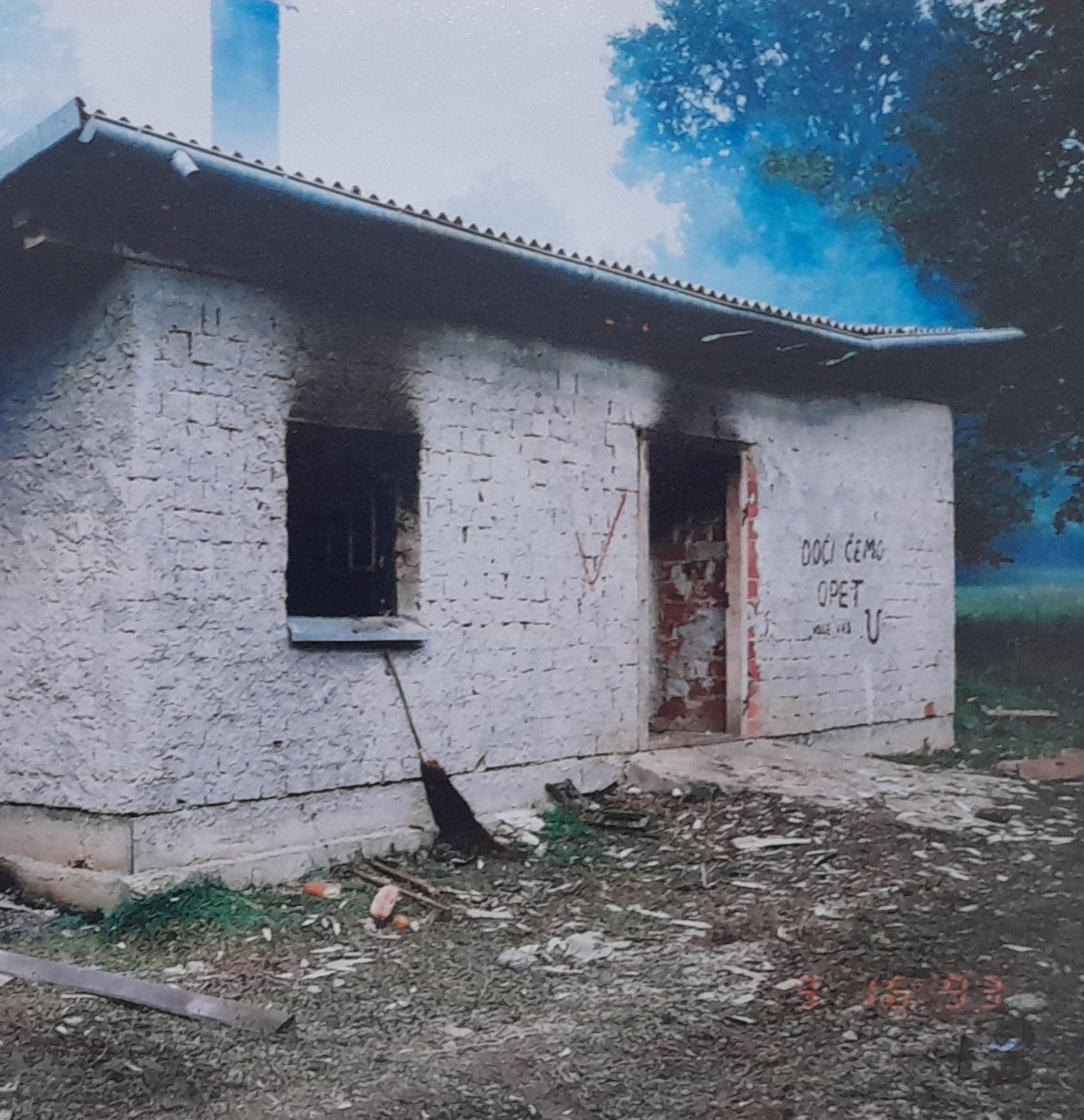
Graffiti left on houses, photographed by UNPROFOR upon entering the Medak Pocket, consisted of messages such as: "WE WILL COME AGAIN. LOVE FROM 'U'" and "'U,' THIS IS CROATIA," unambiguously signalling a threatening stance towards the local Serb population.
The complete destruction of private and commercial property in the villages and hamlets of the Medak Pocket is best documented in the reports written on the basis of direct field observation by members of the Canadian battalion of UNPROFOR and the UN Civilian Police, as well as in the testimonies of villagers and members of the engineering unit of the 9th Guards Mechanised Brigade (9th GMB).
The final report on operations in the Medak Pocket from 15 to 21 September 1993, prepared by the Canadian Battalion (CANBAT-1) on 30 September 1993, states that "the entire area of the Medak Pocket [had been] subjected to a systematic and ruthless plan of ethnic cleansing carried out by the Croatian police and military forces," and that "the cleansing operation probably began soon after the zone was captured on 9 September 1993, and was carried out through a semi-controlled method of killing and looting. However, the full implementation of the cleansing began in earnest on the morning of 16 September 1993, with the bulk of the destruction carried out within 12 hours, by 8:00 p.m. on 16 September 1993."
The report further states that "in the zone, a total of 164 houses and 148 outbuildings were destroyed on private properties. This encompassed every single structure in the Medak Pocket. Nothing was spared. Destruction was carried out in several ways. First, by setting fire to buildings that could burn. Fires were set using large quantities of construction and firewood brought into the zone from outside. Numerous military and police trucks loaded with logs and timber were observed moving throughout the area, delivering wood for kindling. Second, explosives were used to destroy concrete-block buildings and to level them with the ground. It would appear that anti-tank mines were extensively used for destruction. They were placed against the load-bearing walls inside the buildings. Timed fuses were used so that simultaneous detonations would blast all the walls outward, causing the entire building to collapse. It is possible that this method, combined with large fires set at the lower levels, also served to conceal the victims of killings, since after explosives had been used it became virtually impossible to clear the rubble in order to search through cellars. We estimate that over 200 mines were probably required to completely destroy the structures in the Medak Pocket."
Animals and wells were not spared from destruction either. The report notes that there was "a deliberate attempt to kill all domestic animals in the zone. Throughout the Medak Pocket we found the remains of horses, cattle, goats, sheep, dogs, and pigs. In some cases, animals were left tied up in stables which were then set on fire. In total, 139 head of cattle were found slaughtered." It also reports that "in most wells and cisterns, petrol had been poured, or animal carcasses were left to float, in an effort to restrict their future use by returnees."
Graffiti left on houses, photographed by UNPROFOR upon entering the Medak Pocket, consisted of messages such as: "WE WILL COME AGAIN. LOVE FROM 'U'" and "'U,' THIS IS CROATIA," unambiguously signalling a threatening stance towards the local Serb population.
6.3—Concealment of Crimes
The scale of the violence, especially the number of killings in the area of Operation Pocket-93, was concealed through the hiding of corpses.
Protected Witness No. 9, who testified at the trial of Mirko Norac and Rahim Ademi and who was a member of the engineering unit of the 9th Guards Mechanised Brigade, stated that his commander — Chief Engineer of the 9th Guards Mechanised Brigade, Goran Blažević — ordered him to dispose of the corpses. He then went with two military policemen and a colleague from the unit to collect mines, explosives, slow-burning fuses, and detonators, which he brought to a large house on the outskirts of Gospić. The house had an incomplete septic pit, and the surrounding buildings were already demolished. A refrigerated lorry also arrived at the site with a driver and, according to his testimony, three drunken soldiers from Home Guard units.
The Military Police took up positions to secure the access roads, while soldiers unloaded bodies from the refrigerated lorry and threw them into the septic pit as the protected witness planted explosives on the house. More than 40 corpses from the villages of the Medak Pocket were dumped into the septic pit, and when the explosives were detonated, half the house collapsed, covering the corpses.
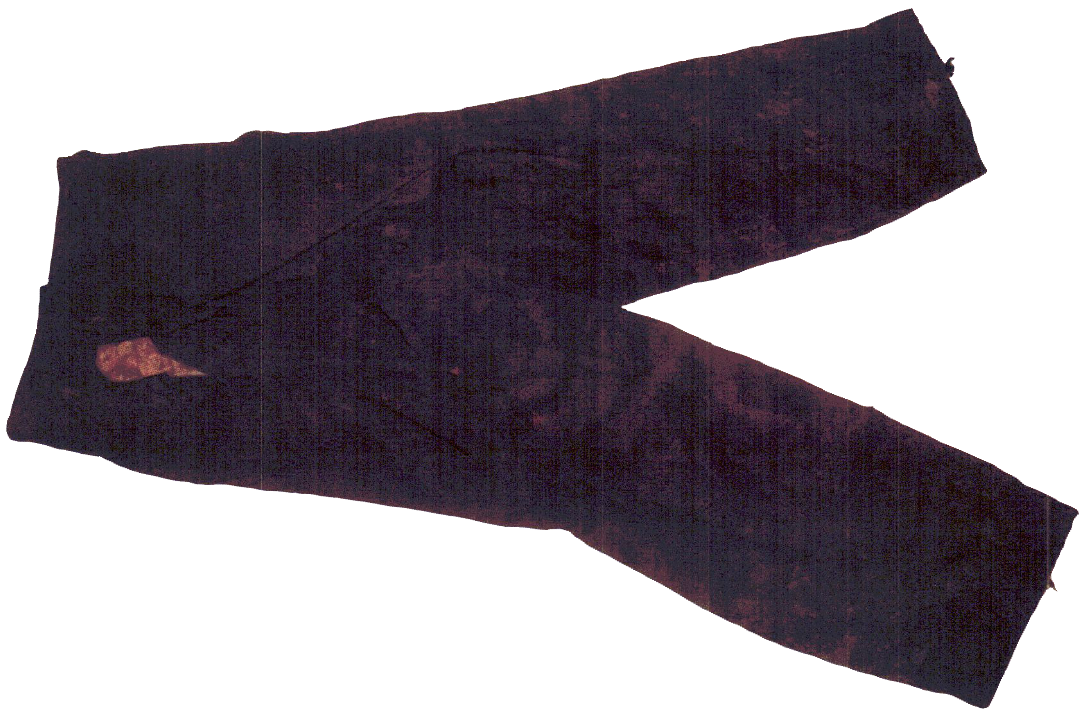
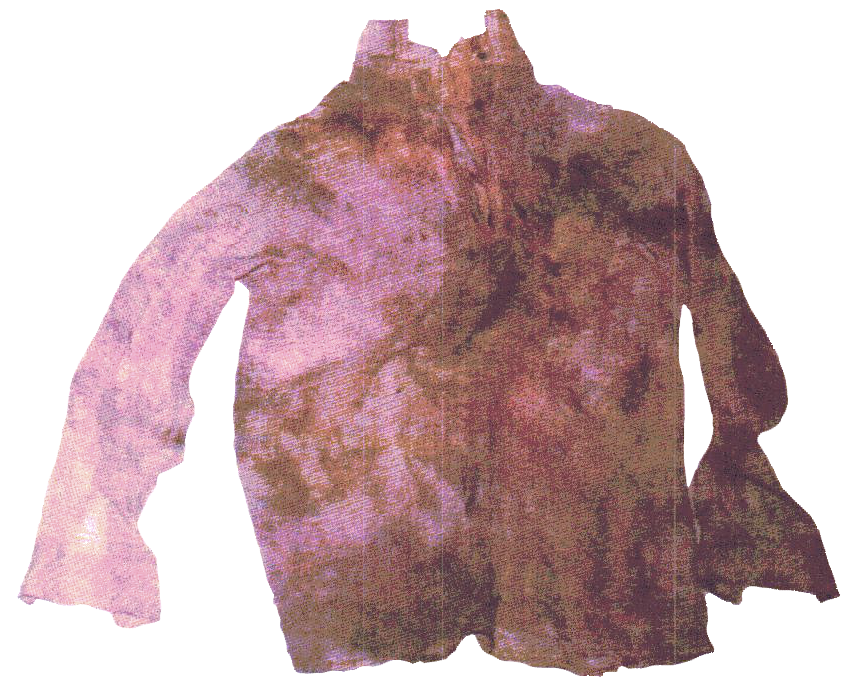
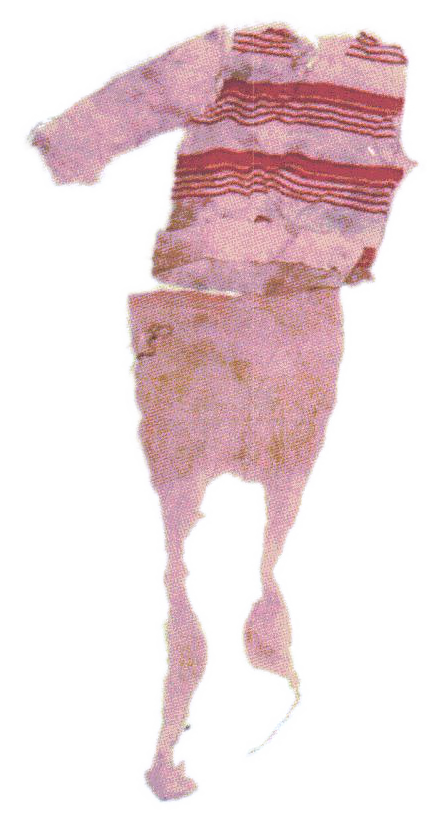
Photographs of the clothing of persons found in a septic tank

One UNPROFOR report presented at the trial of Norac and Ademi states the following: "We surmise that [surgical gloves, ed.] were used for handling corpses during the larger-scale evacuation. The Croats had no other reason to use surgical gloves. This, together with the fact that most of the corpses were found in remote places where they could easily be overlooked during clearance, suggests that many more individual corpses were removed elsewhere. This will be difficult, if not impossible, to prove. Interestingly, on 19 September 1993, Croatian authorities handed over more than 50 bodies to the Serbs at the Gospić crossing point. This may be only part of the victims killed in the Medak Pocket."
Depictions of human remains found in the pit, as well as footage of the excavation and documentation of the pit containing the remains


Similarly, Croatian soldiers did not respect the ceasefire and withdrawal agreement for the Medak Pocket, preventing UNPROFOR entry into the area. They then used this to complete the destruction and to attempt to hide the bodies.
 Video of blocking UNPROFOR’s entry into the Medak Pocket area
The scale of the violence, especially the number of killings in the area of Operation Pocket-93, was concealed through the hiding of corpses.
Protected Witness No. 9, who testified at the trial of Mirko Norac and Rahim Ademi and who was a member of the engineering unit of the 9th Guards Mechanised Brigade, stated that his commander — Chief Engineer of the 9th Guards Mechanised Brigade, Goran Blažević — ordered him to dispose of the corpses. He then went with two military policemen and a colleague from the unit to collect mines, explosives, slow-burning fuses, and detonators, which he brought to a large house on the outskirts of Gospić. The house had an incomplete septic pit, and the surrounding buildings were already demolished. A refrigerated lorry also arrived at the site with a driver and, according to his testimony, three drunken soldiers from Home Guard units.
The Military Police took up positions to secure the access roads, while soldiers unloaded bodies from the refrigerated lorry and threw them into the septic pit as the protected witness planted explosives on the house. More than 40 corpses from the villages of the Medak Pocket were dumped into the septic pit, and when the explosives were detonated, half the house collapsed, covering the corpses.
One UNPROFOR report presented at the trial of Norac and Ademi states the following: "We surmise that [surgical gloves, ed.] were used for handling corpses during the larger-scale evacuation. The Croats had no other reason to use surgical gloves. This, together with the fact that most of the corpses were found in remote places where they could easily be overlooked during clearance, suggests that many more individual corpses were removed elsewhere. This will be difficult, if not impossible, to prove. Interestingly, on 19 September 1993, Croatian authorities handed over more than 50 bodies to the Serbs at the Gospić crossing point. This may be only part of the victims killed in the Medak Pocket."
Similarly, Croatian soldiers did not respect the ceasefire and withdrawal agreement for the Medak Pocket, preventing UNPROFOR entry into the area. They then used this to complete the destruction and to attempt to hide the bodies.
7. Judicial Proceedings and Accountability for Crimes
May 2001
September 2002
May 2004
September 2005
September 2005
May 2008
After three years of proceedings, the Zagreb County Court delivered its judgment on 30 May 2008: Rahim Ademi was acquitted of all charges, while Mirko Norac was sentenced to a single term of seven years' imprisonment because he "failed to prevent, and thus supported and encouraged, the killing of civilians or their inhuman treatment, the looting of civilian property, and the unlawful and wanton destruction of property on a large scale not justified by military necessity," and because he "failed to prevent, and thus supported and encouraged, the killing, torture, and inhuman treatment of prisoners of war."
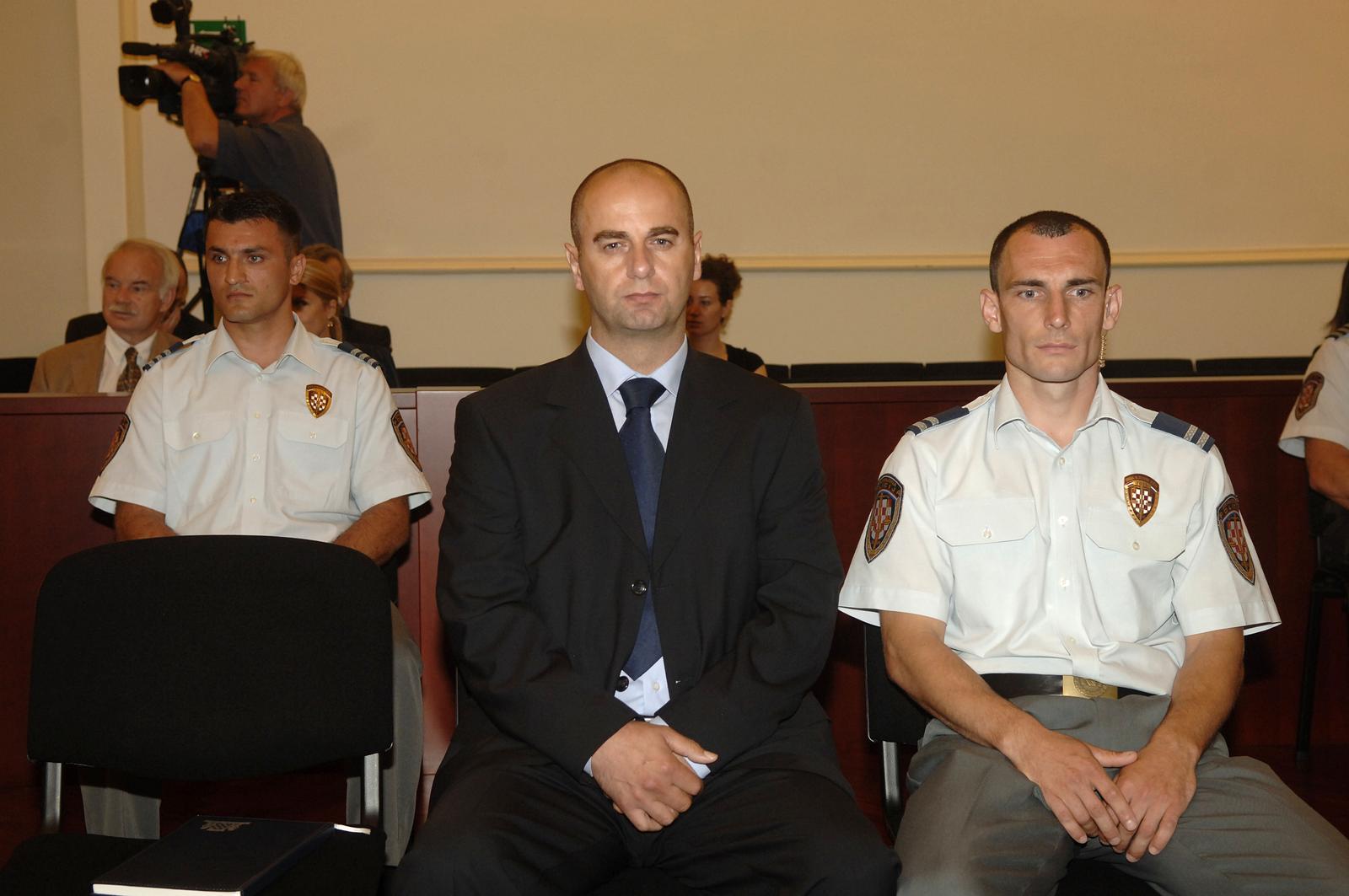
Specifically, Norac was convicted of war crimes against the civilian population and war crimes against prisoners of war.
Norac had previously been convicted in 2001 of war crimes against civilians in Gospić in 1991 and sentenced to 12 years' imprisonment in total. In May 2004, the Croatian Supreme Court reduced his sentence to six years. That same year, the Rijeka County Court's extrajudicial panel merged his sentences of twelve years (for Gospić) and six years (for the Medak Pocket) into a single 15-year term. After serving two-thirds of his sentence, totalling ten years, Mirko Norac was released in 2011.
Norac was the first general of the Croatian Army to be convicted of war crimes in Croatia.
May 2015
In addition to Norac, direct perpetrators of war crimes during Operation Pocket-93 were convicted in separate proceedings. Those include Velibor Šolaja, Josip Mršić, and Josip Krmpotić. All three were members of the Reconnaissance Platoon attached to the 9th Guards Brigade of the Croatian Army, with Krmpotić serving as its commander.

On May 25, 2015, the County Court in Zagreb convicted Velibor Šolaja of war crimes against civilians for 'executing an unidentified elderly female civilian, after taking her from a basement in the area in question, and then, together with a member of the 9th Guards Mechanised Brigade of the Croatian armed forces, J.M., shooting her with their personal weapons.' Josip Mršić was convicted for the same crime on March 6, 2017. Both Mršić and Šolaja, considered parallel perpetrators — since each participated in the crime as a whole — were convicted of war crimes against civilians, namely murder, or for shooting and killing an elderly female civilian with their personal weapons. Mršić was sentenced to three years, while Šolaja received five years of imprisonment.
October 2016
On October 10, 2016, the County Court in Zagreb found Josip Krmpotić guilty of committing war crimes against civilians and sentenced him to three years of imprisonment. The judgment stated that Krmpotić, as the commander of the reconnaissance company of the 9th GMB of the Croatian Army, 'ordered his subordinate members of the Croatian Army to set fire to and demolish houses in the area of the military operation 'Pocket-93,' after which they set fire to and destroyed houses with explosives in the wider area of the villages of Lički Čitluk, Počitelj, and Njegovan.'

8. Victims
CIVILIANS • 29
- Bjegović, Bosiljka (Stevo/Stevan),27 Dec 1909
- Bjegović, Milka (Đuro),22 May 1947
- Jelača, Ljiljana (Mićan),3 Jul 1956
- Jerković, Nikola (Ilija),1 Jan 1961
- Jović, Anđelija (Dobroslava),6 May 1933
- Jović, Dmitar (Mile),19 Apr 1937 / 19 Mar 1937
- Jović, Marinka (Branko),4 Aug 1939
- Krajnović, Đuro (Toma),1 May 1911
- Krajnović, Neđeljka (Samojlo),2 Sep 1921
- Krajnović, Pera (Đuro),1 Jan 1907
- Krajnović, Stana (Jovo),1 Jan 1926
- Krajnović, Štefica (Josip),8 Feb 1931 / 2 Feb 1931
- Kričković, Sara (Trivun),30 Oct 1921
- Kričković-Živić, Ljubica (Trivun),30 Sep 1929
- Matić, Milan (Mile),1 Jan 1949
- Pejnović, Mile (Luka),1 Jan 1935
- Pjevač, Boja (Dane),14 Jan 1925
- Potkonjak, Janko (Stevan),1 Jan 1931
- Potkonjak, Marko (Milan),11 May 1934
- Rajčević, Milan (Nikola),24 Apr 1962
- Rajčević, Sava (Milan),1 Jan 1930 / 1 Jan 1931
- Vujnović, Ankica/Ana (Tomo),19 Mar 1934
- Vujnović, Branko (Stevo/Stevan),8 Feb 1948
- Vujnović, Đuro (Nikola),20 Jul 1927
- Vujinović/Vujnović, Stevan/Stevo (Dmitar),15 Oct 1922
- Vujnović, Momčilo (Dimitar/Dmitar),27 Nov 1936 / 19 Nov 1936
- Vujnović, Nikola (Jovan),13 Mar 1946 / 1 Jan 1947
- Vujnović, Boja (Đuro),1 Jan 1909
- Vujnović, Nikola (Đuro),21 Jun 1954
SOLDIERS • 7
- Basara, Željko (Milan),23 Aug 1971
- Ciganović, Miodrag (Mile),1 Oct 1957
- Ćopić, Željko (Milan),28 Mar 1958
- Despić, Stanko (Risto),23 Sep 1952
- Krivokuća, Dane,1963 or 1964
- Pavlica, Dragan,1968
- Stojisavljević, Nikola (Spasenije),1952
The data on those killed during Operation Pocket-93 have not been precisely documented.
Publicly available sources provide differing figures. Thus, the ICTY indictment against Rahim Ademi states that "during the Croatian military operation in the Medak Pocket, at least 38 Serb civilians from the area were unlawfully killed, and others suffered serious injuries. Many of the killed and wounded civilians were women and elderly persons. In addition, Croatian forces killed at least two Serb soldiers who had been captured and/or wounded. Details on some of the victims, namely 21 civilians and two soldiers, are contained in the annex to the indictment."
The ICTY indictment against Mirko Norac, as well as the consolidated indictment against Norac and Ademi, state that "during the Croatian military operation in the Medak Pocket, at least 29 Serb civilians from the area were unlawfully killed, and others suffered serious injuries. Many of the killed and wounded civilians were women and elderly persons. In addition, Croatian forces killed at least five Serb soldiers who had been captured and/or wounded."
The ICTY indictment against Janko Bobetko states that "at least 100 Serb civilians and captured and/or wounded soldiers from the Medak Pocket were unlawfully killed."
On its official website, the Serb National Council (SNV) states the following regarding those killed during the operation: "After the operation, the Croatian side handed over 52 victim bodies, while UNPROFOR members, who entered the area after 17 September 1993, found another 18 bodies — 11 men and seven women. Eight of the men were soldiers, two were civilians, one was of undetermined status, while all the women found were civilians. In May 2000, 11 bodies were discovered in a septic pit in Gospić, in Obradovića Varoš, six of which were identified as victims from the Medak Pocket."
The RECOM Reconciliation Network states that at least 36 civilians and prisoners of war were killed during Operation Pocket-93, 17 of whom were women. Documenta — Centre for Dealing with the Past, in its most recent data from December 2024, lists a total of 33 victims, 29 civilians, and four soldiers.
In order to establish and make publicly available precise data on those killed, it is necessary for the competent institutions of the Republic of Croatia to invest greater effort.


9. Contemporary Challenges
The area of today's Medak Pocket still consists of abandoned and devastated villages. According to the 2021 census, two people live in Počitelj, five in Lički Čitluk, and only one person in Divoselo.
Population of the Municipality of Gospić according to the 1991 census
the Municipality of Gospić
29.049
64% Croats
30% Serbs
Population of the Town of Gospić according to the 2021 census
the Town of Gospić
11.502
94,34% Croats
3,58% Serbs
1991
2021
Divoselo
1991
344
2021
1
Čitluk
1991
129
2021
5
Počitelj
1991. godine
307
2021. godine
2
In Divoselo, no mine clearance was carried out after the war, and of 118 applications for house reconstruction, only 11 were approved. The village has no electricity, its wells are polluted, and therefore no permanent inhabitants remain. The situation in Počitelj and Čitluk is similar, if not identical.
In the thirty-two years since Operation Pocket-93, no additional investigations or trials have been conducted to identify other responsible commanders and direct perpetrators of the crimes.


